Page 2 of 2

Understanding Property Taxes in Self Storage

Understanding Property Taxes in Self Storage

By: Bill Sitar, Jr. Esq., Vice President & Senior Advisor

Property tax and tax return word on folders stack with label black binder on paperwork documents summary report in busy offices. HR human resources business bookkeeping accountancy Document Concept

Property taxes are a critical component to understanding the value of any real estate asset class, including self-storage.

Real property taxes are typically among the largest line item of expenses in a profit and loss statement. Managing your property taxes effectively is extremely important in a successful self-storage operation.

Being cognizant of the local tax appeal process is incumbent upon self-storage owners that desire effective management solutions for their properties. The most important aspect of the appeal process is initially understanding the critical dates in the process, such as filing deadlines, valuation dates, and appeal periods. Each jurisdiction has different deadlines. Typically, the burden of proof is on the taxpayer challenging the assessment of the property. This means that the taxpayer when challenging his or her property assessment before a local board or court must provide proof that the assessment is incorrect. That proof could come in many different forms including, but not limited to, comparable sales, an appraisal report, a property inspection report, an environmental report, and the like. In some jurisdictions, assessments change every single year. In some jurisdictions, the underlying ratios change every single year. In all instances, these assessments should be reviewed every single year for effective property management of your storage facility.

In most jurisdictions, when an appeal is filed the relief sought is only for the prospective year ahead and not for past years. In some jurisdictions, different boards hear different levels of cases and the taxpayer must be sure it is before the correct board. For example, in New Jersey, a property with an assessment below $1 million can be filed to the county tax board, in which the property is located. However, if the assessment is above $1 million, it may be filed directly to the Tax Court of New Jersey. Typically, a case filed before a county board will be heard faster with limited discovery and less sophistication. The higher courts are more sophisticated but do typically take a longer time, for case disposition.

Other concerns that taxpayers must recognize are that when appealing one’s tax assessment, often times the courts require that the taxes must be paid in full prior to the hearing being allowed to move forward. Additionally, some jurisdictions require annual income statements to be filed with the local municipality, regarding a property’s economic performance, in order for the appeal to proceed.

When looking at valuation, most self-storage facilities will be valued by either the income approach or the sales comparison approach. The income approach utilizes a property’s income less operating expenses and a vacancy rate to derive a net operating income. Thereafter, a capitalization rate is applied to the net operating income to determine the property’s overall value. Under the sales comparison approach, closed transactions of similar properties are analyzed and adjusted for various factors, such as location, size, and timing. Thereafter, the adjusted sales prices are analyzed to determine the overall value.

The biggest takeaway regarding property tax management is that every single year prior to the filing deadline, a property tax review should be made. Necessary to this process, the owner should review the most recent tax bill, the current rent roll, and income and expense statements of the last 3 years. If an appeal is warranted, make sure it is filed before the annual deadline in your jurisdiction!

If you have completed the research in your market and are now in need of reporting information to appeal your taxes, you can reach out to a self-storage specialist to run the necessary reports.   Our company works with self-storage owners and provides complimentary reporting on sales comps, rent comps, etc. and is able to help calculate your cap rate.


Bill Sitar

Bill joined The Storage Acquisition Group in 2016. As the Vice President of Sitar Realty Company & TSAG, he brings a wealth of knowledge to the group. Bill’s diverse background in real estate brokerage, legal services, development, and the financial sector enables him to provide comprehensive solutions during the acquisition process. In addition to being a licensed New Jersey real estate salesperson, Bill has a law license in both New Jersey and Pennsylvania.

Add Value to your Self Storage Asset: Strategic Planning

Add Value to Your Self-Storage:  Strategic Planning

By: Scott Eckert, Advisor

Self storage unit full of cardboard boxes. 3d rendering

Implement a Strategic Plan

Self-storage is a unique asset class with its own set of challenges. As with any investment, it is critical for operators to develop a strategic plan that identifies those critical challenges and builds an approach to dealing with them effectively. Most operators know that developing a strategy is important, but almost all find it daunting to implement or difficult to communicate. Savvy operators have learned to navigate through unpredictable markets and prosper by developing, implementing, and committing to a strategic plan. In certain instances, the potential to create or add value is significant when a strong strategic plan is put in motion.

A strategic plan is a roadmap to grow your business. Goals must be specific and realistic. A well-crafted plan clearly defines the goals or desired outcome and includes a subset of major steps or actions needed to reach it. However, constructing a plan is only one part of the process. Once designed, a strategic plan should be used as a communication tool that coalesces all the stakeholders around a shared vision. Without implementation or failing to communicate your strategies, a strategic plan is worth no more than the paper it’s printed on.

Operators often have a plan and know what changes they should implement to increase revenue or gain efficiencies but fall short in taking the appropriate steps in achieving their desired outcome. This may require rental rate analysis, a change in procedures, or new approaches to marketing.

Markets are unpredictable, volatile, and susceptible to threats. The fear of the unknown is what scares so many operators. Whether it is the fear of losing customers or relinquishing control to management, the owner must overcome their fears and face their challenges head-on to generate new results. Making good decisions can lead to profits, but mistakes are costly. Leap out of your comfort zone and take decisive action, even in the face of uncertainty.

The following information provides tips and considerations for owners and managers to explore throughout the strategic planning process:

Raise Rents and Keep Customers Happy

Owners suffer through paying bills for a less than full facility and leave money on the table when they fail to increase rents on a scheduled basis. Prudent operators, however, will enhance revenue by raising rents on existing tenants. From my experience talking with owners, many continue to keep long term customers at the same rent that they’ve paid since the beginning of their lease, even if the rent is well below market levels. Most of the time it’s because they fear the customer will leave and they’ll be stuck with a vacant unit.

Rental rates vary across markets. Before you raise the rent on a tenant, you will want to do some market research. Speak with other owners and managers to see where your rents stack up. A weekly market survey of competitive properties located within your 3 to 5-mile trade area is the best way to estimate the achievable market rents for your facility.

Be realistic in your assumptions and commit to a plan. Planning, cost management, and revenue forecasting are essential to any business and must be done. However, these activities can be dangerous traps for a strategic operator if their plans are reliant on poor assumptions.  Make sure your unit mix is optimized and determine what unit types are in the greatest demand.

Many owners fall into the trap of applying an across-the-board rent increase to all tenants instead of assigning value to each particular space. A blanket increase essentially weakens the operator’s position by falsely assuming all units can absorb an increase. Conversely, a savvy operator will analyze the market rents for each type of unit and base their estimates on specific unit types all while measuring the tenants’ capacity to pay. Paying attention to tenancy, length of stay, and in-place rents are highly important.

When notifying your tenants of a rent raise, provide a list of any recent upgrades and encourage them to check nearby pricing. If priced appropriately, you should experience less turnover and keep more happy customers. Many customers will accept the rental increase as reasonable if they know what value they’re getting in return.

Increase Economic Occupancies

Occupancy is typically split up into two categories: physical and economic. Both numbers are important measurements when evaluating a property’s performance and are used in the valuation of a property.

Physical occupancy measures the percent of net rentable square footage that is occupied.

Economic occupancy measures the actual gross income as a percent of the potential gross income.

When evaluating vacancies, it is important to compare the actual rent received to the potential rent, and not just focus on the physical occupancy. Oftentimes, the asking or offering rents at self-storage facilities are higher than the actual collected rent or contract rent. This is a consequence of discounts or concessions that are offered to customers initially to get their business. Increasing the contract rent levels at a facility is a must for all storage owners. Limit or eliminate concessions on unit sizes with high turnover rates. An increase in contract rent levels will maximize economic occupancy.

Monitor Operating Expenses

Typically, the operating expenses should approximate between 30 percent and 40 percent of gross income. Many of these expenses are fixed and others are variable. Managing the variable expenses, or the ones you can control is essential to monitoring your operating expenses.

  • Administrative Costs – When is the last time you price shopped for all your administrative needs? Whether it’s for your internet and phone bill or office supplies, taking the time to call a few competitors can translate into significant savings each year.
  • Utilities – Many self-storage facilities offer climate-controlled units. These are indoor air-conditioned or heated units. Try to maintain the temperature at 60-80 degrees, or whatever range you think you can truly maintain and ensure tenant satisfaction. Installing motion detector and LED lighting is another way to reduce your electricity costs.
  • Advertising – For some existing facilities, especially those located along roadways with excellent visibility and signage, an extensive advertising campaign may not be necessary. However, as nearby competition increases, owners are recognizing the importance of proactively marketing the store. Analyze your marketing and advertising costs and reevaluate where you are spending your marketing dollars. As trends evolve, so do marketing tools. Make sure you market the facility across online and social media platforms.
  • Repairs and maintenance – Repairs and maintenance expenses typically include all third-party maintenance service contracts and the cost of maintenance and repairs supplies. Proper maintenance includes trash removal, landscaping, pest control, security gate maintenance, and other maintenance items. Repairs and maintenance expenses are very property specific. Much of the preventative maintenance can be done by a handy owner or manager. Otherwise, get a few quotes from local contractors to make sure you get the best price and the work is done right.

Maximize Other Income

Other income is typically associated with items such as forfeited deposits, late charges, locks, insurance, and other miscellaneous charges. It also includes sales and commission income such as truck rentals, box and packing supplies, towing accessories, etc., and the income derived from these sources is a net figure. The additional services and products offered at your facility should provide convenience for your customers, and as a result, you can expect a boost in additional revenue.

Stay Customer Focused

Managers are viewed by your community as the face of the company. As a self-storage manager, it’s your duty to provide excellent customer service. Honesty, flexibility, and dependability go a long way in the eyes of the customer. Master these skills, and you will already be ahead of the pack.

Focus your energy on the important choices that influence customers to spend money at a storage facility. Get feedback from tenants on a routine basis. The customer will always decide to spend their money at the location that provides a superior value proposition.

Navigating the self-storage industry can be an ongoing process that is best achieved by utilizing the help of industry professionals.  This is why our company offers a variety of industry-specific reports and facility valuations to storage owners at no cost.  Before you consider investing in your facility, reach out to one of our advisors to see how your market is performing and the best use of your time and money.


modern business center

Scott joined The Storage Acquisition Group in 2017 to source acquisition opportunities throughout the Mid-Atlantic region. Scott’s background is in real estate appraisal and valuation assignments of multifamily property throughout Virginia.


Building Relationships: How they Enhance your Self-Storage Investment

Building Relationships:  How they Enhance your Self-Storage Investment

By: Fred Paris, Vice President & Senior Advisor

They're stronger when they're together

People like to do business with people they like, and people like others who appreciate them.  Someone may forget what you said or what you did, but they will never forget how you made them feel.

The most powerful tool in developing relationships is to appreciate other people, and the two most powerful words in building a relationship are ‘Thank You’.  The concept seems simple enough, but all to often people forget to invest in building the relationship and rush to discuss “the deal”.

There are small steps you can take when initiating the building of a relationship which pays off tremendously in the long run.  From when I began my career in planning and economic development, and throughout my 18 years in commercial real estate I have relied on some key attributes of building successful business relationships:

  • Authenticity – Be who you are and accept others as they are. It is incredibly transparent when you are working with someone and they are not being authentic.  By definition being authentic comes from within.  It is when our actions and words correspond with our beliefs and values. It is being ourselves, not an imitation of what we think we should be or have been told we should be, and when you choose to add this to your business relationships it builds respect and trust.
  • Mutual Respect – Be patient, attentive, truly engaged, and interested in the other person’s point of view. One of the best and easiest ways to show respect to the people you are working with is to get to know them on a deeper level. Take the time to listen and get to know their motivations and goals.  At a professional or personal level, their goals will allow you to work more meaningfully as a team.  You will also learn what the best way to communicate with them is and they will get to know you better as well.
  • Be Personal – Show interest in the other person’s beliefs, family, leisure activities, etc. This can be achieved by focusing on two qualities: listening and sharing.  If you truly listen to someone speaking, they know it. They feel it. Are you responding as they speak to show them you hear what they are saying?  Especially when conducting business over the phone, it is necessary to respond appropriately to show you heard what was said.  It’s also important to start sharing. A trusting relationship can grow because both sides are opening up. By sharing the relationship has the best opportunity for growth and future success.  If you do not feel comfortable sharing personal information, that is fine, you can share your business knowledge and allow a connection to be developed, but sharing personal aspects of your life demonstrates the personal connection that is so important to fruitful relationships.
  • Goals & Values – What are the other person’s business/personal goals and what values do they live by. We touched on this with mutual respect, but understanding someone’s values as they relate to their goals provides you with a better understanding of them and the decisions they make.  A person’s values are what they find important in life and understanding if it is their family or their bank account makes a difference in how you build the relationship.
  • Referrals – Be ready to offer contacts and referrals that fit the situation and don’t compromise your relationship with these people. Referrals are a reflection of you.  When you refer someone, it helps to build trust but can also have the reverse effect.  This is why it is essential to have a good network of business partners that you trust.  You would never want a referral to hinder a relationship you are trying to build.
  • Loyalty – This may be one of the most important traits a person can have for a long-term personal relationship. This trait seems to be less prevalent in today’s world, but may well be the most important one for securing a long-term relationship.  Knowing that someone truly has your back often leads to the deepest and most trusting personal and business relationship.  It is important not to confuse loyalty with longevity.  It has nothing to do with the length of employment and everything to do with actions. Loyalty can be seen by people who work hard, are committed to success, and respect relationships that have been built with the right motives in mind.

When I entered the storage industry in 2014, I began to build my network of relationships.  Over the past 6 years, I have maintained relationships with several self-storage owners that were among some of the first I contacted.  They may not have had an interest in selling then, but I continued to build the relationship.  Many have come back to me or became open to working with our company on acquiring their facilities.  This is due to always being authentic, demonstrating mutual respect, showing interest in their personal values, and staying loyal to them over the years.  I firmly believe that building personal relationships is the best investment you can make to enhance your opportunity for success in the self-storage industry.


Fred Paris

Fred joined The Storage Acquisition Group in 2014 and specializes in finding facilities for acquisition in the Mid Atlantic and South.  Fred currently serves as the company’s Vice President and a Senior Advisor.

Due Diligence & Self-Storage: What is the process?

Due Diligence & Self-Storage:
What is the Process?

By: The Storage Acquisition Group

due diligence self storage investment
The Misunderstood Step of Investing in Self-Storage.
Have you recently decided to acquire or liquidate a self-storage investment? Let us help you understand how to standardize due diligence and the steps in the process.

Definition of Due Diligence:

In plain terms, due diligence is simply the process of taking reasonable steps to ensure the terms and conditions of a transaction meet a particular standard before proceeding. That analysis can be as superficial as walking around a used car and giving the tire a sturdy kick, or it can be as in-depth as an investigative audit. In the case of a self-storage facility, the complexity of the requirements will fall somewhere in between. This article will examine common terms, processes, and best practices to shed some light on an often-misunderstood step of the purchase and sale transaction.

The Due Diligence Process:

During the due diligence period, the prospective buyer and seller have agreed to work together. The seller is not actively marketing their facility for sale to others. They are giving the buyer a chance to examine the facility in-depth so that the buyer can determine whether or not moving forward to closing is prudent.

Ideally, both buyer and seller will have given some thought to the review process before contract negotiations begin. The details of the due diligence period are spelled out in the purchase and sale agreement. Both parties will need to agree on what is often a lengthy list of documents to be provided to the purchaser (Table 1.0), access to the property, and most importantly, timing. Generally speaking, one can expect the review period to last between 30-90 days depending on the resources of the buyer and the scope of the deal. The due diligence process can feel like a very pervasive experience.  While many of the documents required by the buyer are non-negotiable because they are fulfilling a bank requirement, some other terms are negotiable, and the seller is not without recourse before the terms of the agreement have been set.

In addition to document requirements, sellers will need to be prepared to provide access to a number of third-party consultants. Common visits include environmental testing, property condition visits, appraisals, and surveyors, to name a few. By adhering to normal business practices and continuing to address facility maintenance, marketing efforts, and occupancy all the way through to closing, these visits should not pose an interruption or cause undo strain for the seller.

Buyers & Sellers:

So, what is the point? What exactly is the prospective buyer doing with all of those documents?  A buyer is using the financials and operational reports provided to recreate and simulate the current state of the facility and make high-quality projections about future growth. It benefits both seller and buyer when those projections are based on plenty of reliable data points that account for seasonality, changes in the community demographic and area development. In the end, the shared goal is for the transaction to move forward with feelings of confidence on all sides and that is best achieved through patience and cooperation.

Just as experienced buyers often rely on a proven checklist of due diligence requirements and procedures, sellers too can take the strain out of the process with a little forward preparation. Keeping well-organized financial and operational records will not only make the due diligence process easier but conducting a monthly review of said documents can give an owner/operator valuable insight. Treating record maintenance as another line item on the to-do list is a best practice that can have far-reaching benefits, but perhaps nowhere will those benefits be felt more than when it comes time to collect data during the due diligence period of a facility sale.

Table 1.0

Sample List of Due Diligence Documentation Required During a Facility Sale
Document Type Range
Tax Returns 3 Years
Income Statements by Month 3 Years
Balance Sheets by Month 3 Years
Tax Bills 1 Year
Utility Bills 1 Year
Management Summaries by Month 1 Year
Occupancy Statistics by Month 1 Year
Copy of Rental Lease Agreement
Listing of All Current Rental Agreements
Listing of Major Improvements with $ Value
Pertinent Permits and Licenses
Environmental Reports
Surveys
Certificates of Occupancy (All Buildings)


The Storage Acquisition Group logoThe Storage Acquisition Group specializes in purchasing storage facilities and portfolios nationwide. Uniquely, we allow owners to sell direct without having to list their facility. With our 4-tiered approach, Market Analysis, Acquisitions, Underwriting, & Closing Support, The Storage Acquisition Group is able to help owners navigate a simple sales process while netting the highest possible profit.

Selling Your Facility or Portfolio

Selling Your Facility or Portfolio

By: The Storage Acquisition Group

IMG

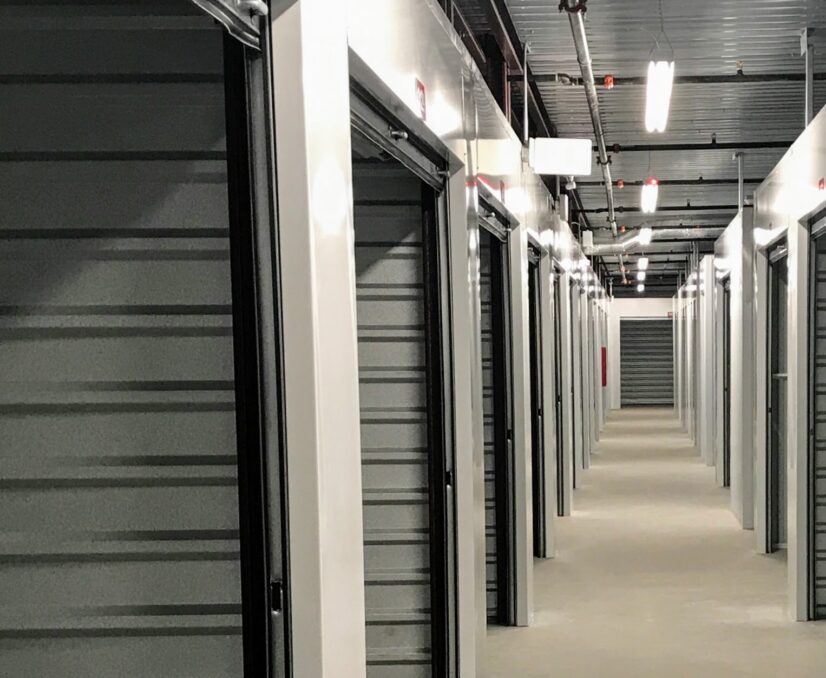
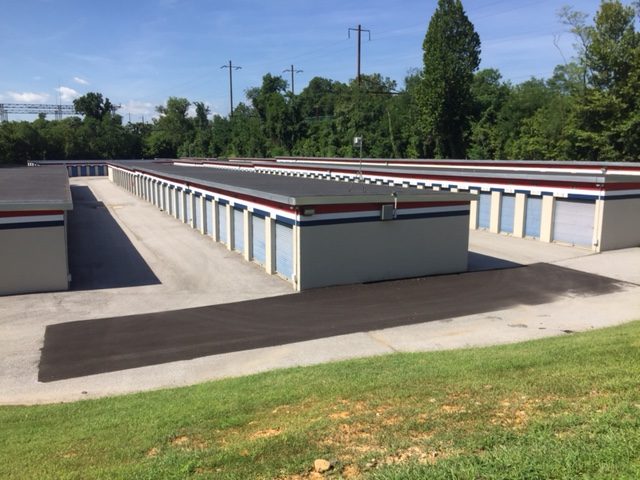
Self-Storage facilities are valued based on a range of factors, including occupancy, location, size, condition, and financials.

See how your facility measures up.

If you are thinking about selling your facility or portfolio, providing detailed documentation on all the above factors will be a necessary step whether you sell direct, list with an agent, or attempt to sell the property yourself.

A widely used financial term, capitalization, or CAP, rate, reflects a rate of return based on the property’s net operating income (NOI).  Being able to determine and justify the NOI, or cash flow of the property after income and expenses, will directly relate to the purchase price you are offered. The more desirable the property, the lower the return, CAP rate, a buyer is willing to accept to purchase the property.  There is an inverse relationship between the CAP rate and the value.  Since the NOI is fixed at the actual number, the lower the CAP rate a buyer is willing to accept, the higher the price they will pay for the property.

Completing an accurate cash flow analysis is done by reviewing your expenses as they relate to all operations. If you leave out expenses that are commonly included for typical facilities, the buyer will add back in an estimated amount for their valuation calculations.

Items in your cash flow need to include:

  • Real estate taxes & property insurance
  • Advertising & marketing
  • Management fee & payroll
  • Office Expenses: supplies, phone/Internet, credit card processing fees, online software
  • Operating Expenses: utilities, lawn care, pest control, repairs and maintenance, trash service and security

The worst way to try to increase your perceived value is to cut expenses, this does not work in today’s market.  If your property is underperforming you may want to investigate some ways to increase revenue prior to selling.  There are many ways to accomplish increasing revenues.

The Storage Acquisition Group looks at the following primary criteria when targeting self-storage facilities for acquisition:

  • 45,000 net leasable square feet or higher
  • Urban market, preferred in Top 100 MSA’s
  • Retail oriented sites with 35,000 VPD and 50,000 population in a 3-mile radius
  • Climate control and other enhanced features

Although your facility may not offer all of these primary criteria, it still could be considered as a candidate for our direct acquisition process.

Additional characteristics which help the value of your facility are:

  • Multiple unit sizes advertised at market rents
  • Attractive appearance (curb appeal matters in storage too)
  • Proper drainage (avoiding flooding and freezing)
  • Proper signage or ability to have signage seen by passing traffic
  • Automatic gate with 24-hour access
  • Proper lighting (security systems and cameras are a definite bonus)
  • Web-enabled rentals and payments

Having or adding any of these features will increase the property’s value and allow it to be considered as part of our acquisition process. In addition, understanding your market and its specific demands is also essential in the valuation process. Are you located in Florida? If so, climate-controlled units are a must. Always analyze your market to determine if you are offering the features considered standard and offered by your competition.

Now you that you have determined your facility meets some, or all, of the criteria to sell, what comes next? You will need to decide how you would like to sell your facility. There are three basic options: list your facility with a broker, sell it yourself, or skip all the marketing and sell direct to our client.

With our direct selling option, once we review the financials, we can provide a purchase offer. With the acceptance of the offer, the next step in the process is due diligence. At The Storage Acquisition Group, we handle the due diligence process for you with the help of our due diligence coordinator.

Due diligence includes (but is not limited to) verification of the following:

  • Trailing 12-month financial statement
  • Occupancy statistics report
  • Management summary
  • Income and expenses
  • Property inspections

Once the due diligence has been completed, the next step is to proceed to closing. We offer closing support including one point of contact during the closing process.

The decision to sell is never easy which is why we offer a free market analysis and an associate who specializes in your market. Setting aside the complexity of the transaction, simply walking away from a business can be a difficult decision. For many owners, storage ownership has been a continuous process of designing, building, maintaining, and improving the asset. As a company, we appreciate the hard work, sweat equity, financial and emotional risk that goes into this. We want to make the selling process smooth and help you make the right decision, so we’re here to help with any questions regarding market dynamics, capital gains, 1031 options, and other issues that may affect the decision or timing of a sale.

If you have more questions concerning selling your facility, please reach out to us anytime at 757-867-8777 or info@thestorageacquisitiongroup.com.

Unlike other CRE brokers, selling direct to our client eliminates the need to list your facility in order to sell. In fact, our company’s model is based on selling direct and netting you the highest possible return. We are able to do this because we exclusively represent a buyer who has dedicated $5B to self-storage acquisitions nationwide and we charge no fees to the seller for our service, thereby increasing your bottom line


The Storage Acquisition Group logoThe Storage Acquisition Group specializes in purchasing storage facilities and portfolios nationwide. Uniquely, we allow owners to sell direct without having to list their facility. With our 4-tiered approach, Market Analysis, Acquisitions, Underwriting, & Closing Support, The Storage Acquisition Group is able to help owners navigate a simple sales process while netting the highest possible profit.

The Pros and Cons of Selling your Storage Facility

The Pros and Cons of Selling your Storage Facility

By: The Storage Acquisition Group

Ceo
Analyzing the Benefits and/or Challenges of Selling your
Self-Storage Investment
Are you ready to sell your self- storage facility? There are several ways to go about it, explore the pro’s and con’s.

When the time comes to sell your self-storage facility, there are several ways to go about it, all of which in the past have had pros and cons. You have invested a substantial amount of time and money in your investment therefore it is good to be able to assess what options are available to you.

Below are some of the options available to owners and an inside look at the benefits and drawbacks.

List your property with a real estate agent

This is the most familiar way to sell any real estate investment.

PRO’S
• The broker will use their market knowledge to estimate a value, the accuracy of which depends on the experience and expertise of the broker.

CON’S
• The broker requires a listing agreement, tying the property up while they advertise your financials to the local/national market in hopes that a buyer will be interested and make an offer.

• If the broker finds a suitable buyer and the property goes to closing, typically you would be responsible for paying a commission for their services. That commission can range from two to six percent depending on the size of the deal. The typical broker transaction can take months or even years to find a buyer, negotiate an offer and close the deal.

Find a buyer yourself

A second option is to try to find a buyer yourself.

PRO’S
• You save the large commission fee.

CON’S
• You have to prepare your own financial offering package along with any necessary marketing materials.
• You have to spend your money on all marketing materials and advertising, and setting the value becomes your best guess.
• You have to spend your time that should be spent running your business finding prospective purchasers.
• All the negotiations are your responsibility
• You have to coordinate the closing and you may never really be sure you got a fair price.

Use The Storage Acquisition Group

An easier alternative to selling your facility

PRO’S
• We directly represent a large private equity fund ($5 billion) that acquires and manages self-storage facilities across the country.
• We are prepared to pay fair market value for qualified deals in target markets.
• We perform all of our own due diligence and underwriting, so your financials are kept confidential.
• We provide a free market analysis valuation that you can keep, even if no deal is finalized.
• We assemble the final offering package and handle presenting your property to the equity fund.
• You will have one point of contact throughout the process from document submission to inspection scheduling to closing.
• Once the due diligence is completed closings proceed quickly
• There are no listing agreements, or fees or commissions paid by you as the seller.

The Storage Acquisition is able to provide you with the pro’s of listing with an agent or selling yourself, with none of the con’s. If you are considering selling your facility, we would love the opportunity to help.


The Storage Acquisition Group logoThe Storage Acquisition Group specializes in purchasing storage facilities and portfolios nationwide. Uniquely, we allow owners to sell direct without having to list their facility. With our 4-tiered approach, Market Analysis, Acquisitions, Underwriting, & Closing Support, The Storage Acquisition Group is able to help owners navigate a simple sales process while netting the highest possible profit.

The Storage Acquisition Group Announces New Chief Marketing Officer

The Storage Acquisition Group Announces New Chief Marketing Officer

By: The Storage Acquisition Group

Melissa Shandor

YORKTOWN, VA, January 9, 2020 (Newswire.com) – The Storage Acquisition Group (TSAG) appointed Melissa Shandor as Chief Marketing Officer, effective immediately. As CMO, Shandor will be responsible for the company’s advertising, sponsorships, promotions, research, insights, and digital marketing initiatives.

“We are excited to bring Melissa on board to continue our presence nationally and launch our initiative to expand internationally,” said Monty Spencer, President & CEO of The Storage Acquisition Group. “Since its inception in 2014, The Storage Acquisition Group has seen substantial growth and bringing Melissa on board will support our expansion.”

Shandor brings extensive experience in digital marketing and brand awareness and a proven and consistent track record to launching and driving rapid growth in marketing. As CMO, Shandor will be responsible for driving TSAG’s success through a layered marketing approach throughout its 30+ markets.

About The Storage Acquisition Group 

The Storage Acquisition Group is a commercial real estate firm that specializes in self-storage acquisition. With brokers nationwide, the TSAG team is able to purchase properties prior to listing. TSAG represents one of the largest private owners of self-storage in the United States. Its investment fund allocated over $2 billion for the acquisition of quality self-storage for sale.


The Storage Acquisition Group logoThe Storage Acquisition Group specializes in purchasing storage facilities and portfolios nationwide. Uniquely, we allow owners to sell direct without having to list their facility. With our 4-tiered approach, Market Analysis, Acquisitions, Underwriting, & Closing Support, The Storage Acquisition Group is able to help owners navigate a simple sales process while netting the highest possible profit.

Monty Spencer Announced as Power Broker Award Winner for CoStar

Monty Spencer Announced as Power Broker Award Winner for CoStar

By: The Storage Acquisition Group

Monty Spencer

Cowles M. ‘Monty’ Spencer, Jr. receives the CoStar Power Broker Award for the highest transaction volume in Commercial Real Estate

WASHINGTON, March 17, 2020 (Newswire.com) – CoStar Group, Inc., the data/analytics leader of the commercial real estate industry, just announced this year’s Power Broker Award recipients, recognizing professionals and firms who closed the highest transaction volume in commercial real estate deals and leads in their respective markets. In Hampton Roads, Virginia, Cowles M. “Monty” Spencer, Jr. has been recognized as one of the most active local dealmakers with the prestigious industry award

Monty serves as the President and CEO of The Storage Acquisition Group, an affiliate of Mid-Atlantic Commercial Real Estate. He has completed over $1.5 billion in transactions over his career in the CRE industry.

About The Storage Acquisition Group:

The Storage Acquisition Group specializes in purchasing storage facilities and portfolios nationwide. Uniquely, they allow owners to sell direct without having to list their facility. With its four-tiered approach – Market Analysis, Acquisitions, Underwriting and Closing Support – The Storage Acquisition Group is able to help owners navigate a simple sales process while netting the highest possible profit.

The Storage Acquisition Group is an affiliated entity of Mid-Atlantic CRE, located at 110 Mid-Atlantic Place, Yorktown, Virginia.


The Storage Acquisition Group logoThe Storage Acquisition Group specializes in purchasing storage facilities and portfolios nationwide. Uniquely, we allow owners to sell direct without having to list their facility. With our 4-tiered approach, Market Analysis, Acquisitions, Underwriting, & Closing Support, The Storage Acquisition Group is able to help owners navigate a simple sales process while netting the highest possible profit.